A Germany solo trip by train in 2026 works best when you connect major cities by ICE or IC trains, then use regional trains for smaller stops.
A strong first route is Berlin, Hamburg, Cologne, Frankfurt, Heidelberg, Nuremberg, and Munich, with day trips to Lübeck, Koblenz, Würzburg, Füssen, or Regensburg.
Book long-distance legs early through Deutsche Bahn, use the Deutschland-Ticket only for local and regional transport, and leave 30 to 60 minutes for transfers.
Germany suits solo rail travel because DB long-distance trains serve more than 300 stations daily, while the national rail network covers 33,400 kilometres and 5,400 stations, according to the DB long-distance network.
Best Germany Train Route for a First Solo Trip
The best first solo route is Berlin to Hamburg, then Cologne, Frankfurt, Heidelberg, Nuremberg, and Munich. It gives a clear north-to-south arc: capital history, northern port culture, Rhine cities, old university towns, Franconian architecture, and Bavaria.
For 7 days, cut either Hamburg or Heidelberg. For 10 to 12 days, keep every stop and add two day trips. German stations are efficient, but current infrastructure work means some journeys need patience.
Deutsche Bahn’s 2025 interim report put DB Long-Distance punctuality at 63.4% in H1 2025, while regional punctuality was above 90%, so solo travelers should avoid tight transfer plans. You can verify the latest published figures in DB punctuality data.
| Route leg | Best use | Ticket choice |
| Berlin to Hamburg | Fast northbound pairing, but check 2026 works | ICE or IC saver fare |
| Hamburg to Cologne | Long hop toward the Rhine | ICE or IC saver fare |
| Cologne to Frankfurt | High-speed transfer and airport access | ICE if speed matters |
| Frankfurt to Heidelberg | Short cultural stop after a business hub | Regional ticket or saver fare |
| Heidelberg to Nuremberg | Historic bridge toward Bavaria | IC, ICE, or regional mix |
| Nuremberg to Munich | Easy final leg with day-trip options | ICE, regional train, or Bavaria ticket |
Best Cities for Solo Train Travel
Source: thetrainline.com
Berlin is the best starting city if landing at Berlin Brandenburg Airport or arriving from Poland, Czechia, or northern Europe. Stay near Berlin Hauptbahnhof, Friedrichstraße, Alexanderplatz, or Zoologischer Garten for simple rail and U-Bahn links.
Hamburg suits a 1 or 2-night stop after Berlin, especially for Speicherstadt, the Elbphilharmonie area, harbour walks, and Lübeck.
The Hamburg to Berlin corridor has faced major modernization work from August 2025 into 2026, so check the Hamburg to Berlin modernisation notice before booking a tight connection.
Cologne works because the cathedral stands beside Köln Hauptbahnhof, local transport is direct, and the city is a base for Bonn, Düsseldorf, Aachen, or Koblenz.
DB lists Cologne as an important railway stop with long-distance access, and Bonn sits between Cologne and Koblenz, making a Rhine day easy without a rental car. For station and city details, use the Cologne rail guide.
Frankfurt is useful for airports, museums, and onward trains rather than a long leisure stay. Pair it with Heidelberg for an old town, castle views, and slower evenings.
DB promotes selected Germany saver fares to Heidelberg from €21.50 in second class, although actual 2026 prices depend on date, route, demand, and ticket availability. Check Heidelberg fares before setting a daily budget.
Nuremberg gives solo travelers a compact old town, castle views, and major Second World War history sites. Munich then adds museums, beer halls, English Garden walks, and day trips to Füssen, Regensburg, or the Bavarian Alps.
For travelers planning a more private evening in the city, an escort service München may fit naturally into the wider Munich nightlife research.
Best Tickets for a Germany Solo Train Trip in 2026
Source: munich.travel
The best ticket depends on train type, travel pace, and flexibility. ICE and IC tickets are usually better for long city-to-city legs. The Deutschland-Ticket is better for regional hops, buses, trams, U-Bahn, and S-Bahn.
| Ticket | Best for | Key 2026 detail |
| Super Sparpreis | Fixed long-distance trips | From €6.99 on selected short routes, no cancellation |
| Sparpreis | Fixed trip with limited fallback | DB lists a €10 cancellation fee |
| Flexpreis | Last-minute or uncertain plans | More flexible, usually higher priced |
| Deutschland-Ticket | Local and regional travel | €63 monthly subscription, not valid on ICE, IC, or EC |
| German Rail Pass | Non-Germany residents using many ICE days | Flexi formats with 3, 4, 5, 7, 10, or 15 travel days |
| Bavaria regional day ticket | Munich, Nuremberg, Füssen, Regensburg days | €34 for 1 person in second class |
DB’s ticket pages are the safest place to verify final prices because saver fares are quota-based. Super Sparpreis details list fares from €6.99 on selected short routes, while the regular Sparpreis has different conditions and a cancellation fee.
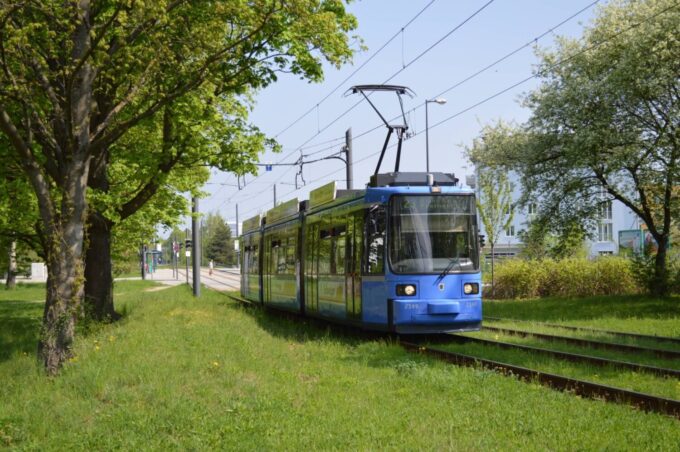
The Deutschland-Ticket costs €63 per month in 2026 and covers local transport, including RB, RE, S-Bahn, buses, trams, and subways. It excludes ICE, IC, and EC trains, so it should not be used for fast Berlin to Munich or Hamburg to Cologne journeys. The clearest rule summary sits on DB’s Deutschland-Ticket rules page.
For a solo visitor from outside Germany, the German Rail Pass can beat separate ICE tickets when several long journeys fall close together.
DB lists flexi options from EUR 178, with selectable travel days within 1 month. Always compare pass cost against actual DB fares for the same dates before buying. Start with the official German Rail Pass page, then price your route leg by leg.
For Bavaria, the regional day ticket can work well when staying in Munich or Nuremberg and making slower regional day trips. DB lists the Bavaria regional day ticket at €34 for 1 person in second class.
Should Solo Travellers Reserve Seats?
Source: europeansleeper.eu
Solo travelers should reserve seats on busy ICE and IC trains, especially Fridays, Sundays, holidays, summer weekends, and routes into Munich, Hamburg, Cologne, or Berlin. National long-distance seat reservation prices start from €5.50 according to DB.
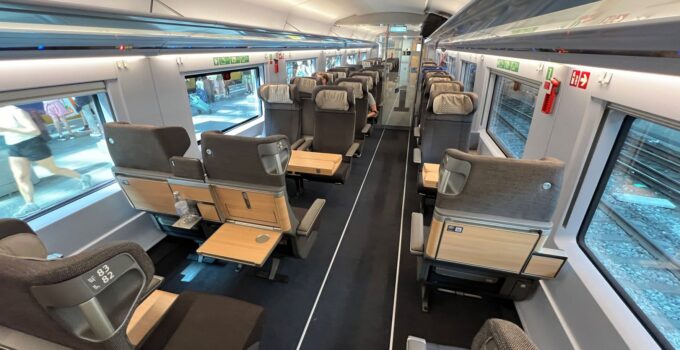
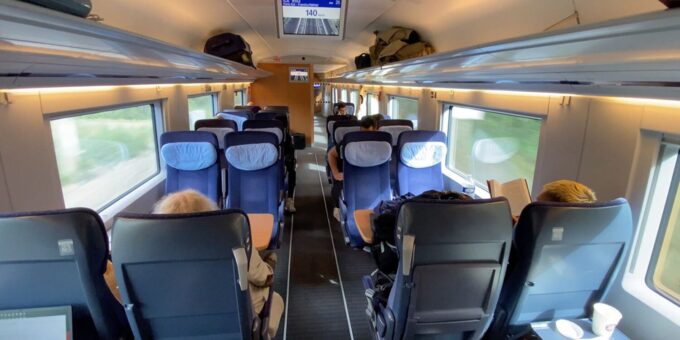
Window seats are better for scenic legs. Aisle seats are better when luggage is on a rack nearby or when changing quickly. In open saloon carriages, check electronic reservation displays above seats before settling in. If a seat shows part of your route as reserved, choose another one rather than moving mid-journey.
Practical 7-Day and 10-Day Plans
A 7-day solo plan can run Berlin for 2 nights, Cologne for 2 nights, Heidelberg for 1 night, and Munich for 2 nights. It keeps the route simple, avoids daily hotel changes, and still gives a strong mix of modern cities and older historic centres.
A 10-day plan can add Hamburg, Nuremberg, and one extra Rhine or Bavaria day. Use ICE for hops over 2.5 hours when fares are reasonable. Use regional trains for towns near a base city.
- 7 days: Berlin, Cologne, Heidelberg, Munich
- 10 days: Berlin, Hamburg, Cologne, Heidelberg, Nuremberg, Munich
- 12 days: Add Lübeck, Koblenz, Würzburg, Füssen, or Regensburg
Train Travel Tips for Solo Visitors
Source: seat61.com
Travel with one carry-on suitcase or backpack that can go above your seat or between seat backs. Download DB Navigator before arrival, add every ticket offline, and watch platform numbers, carriage sequence displays, and delay alerts together.
At major stations, arrive 15 to 20 minutes early the first time because platforms may sit on different levels.
Berlin Hauptbahnhof, Frankfurt Hauptbahnhof, Hamburg Hauptbahnhof, and Munich Hauptbahnhof are manageable, but they are large enough to punish rushed transfers.
Keep valuables in a small crossbody bag in front of you. Bigger ICE trains often have a Bordrestaurant or bistro, but carry water and a snack.
Regional trains may have no catering. Sunday shop hours remain limited across much of Germany, while larger stations usually have open bakeries, kiosks, or supermarkets.
Conclusion
A solo Germany train trip in 2026 is easiest when built around a few strong bases, not a different hotel every night. Use ICE or IC trains for the long legs, regional trains for shorter day trips, and the Deutschland-Ticket for local and regional travel only. Reserve seats on busy trains and check DB construction notices before finalizing tight plans.