

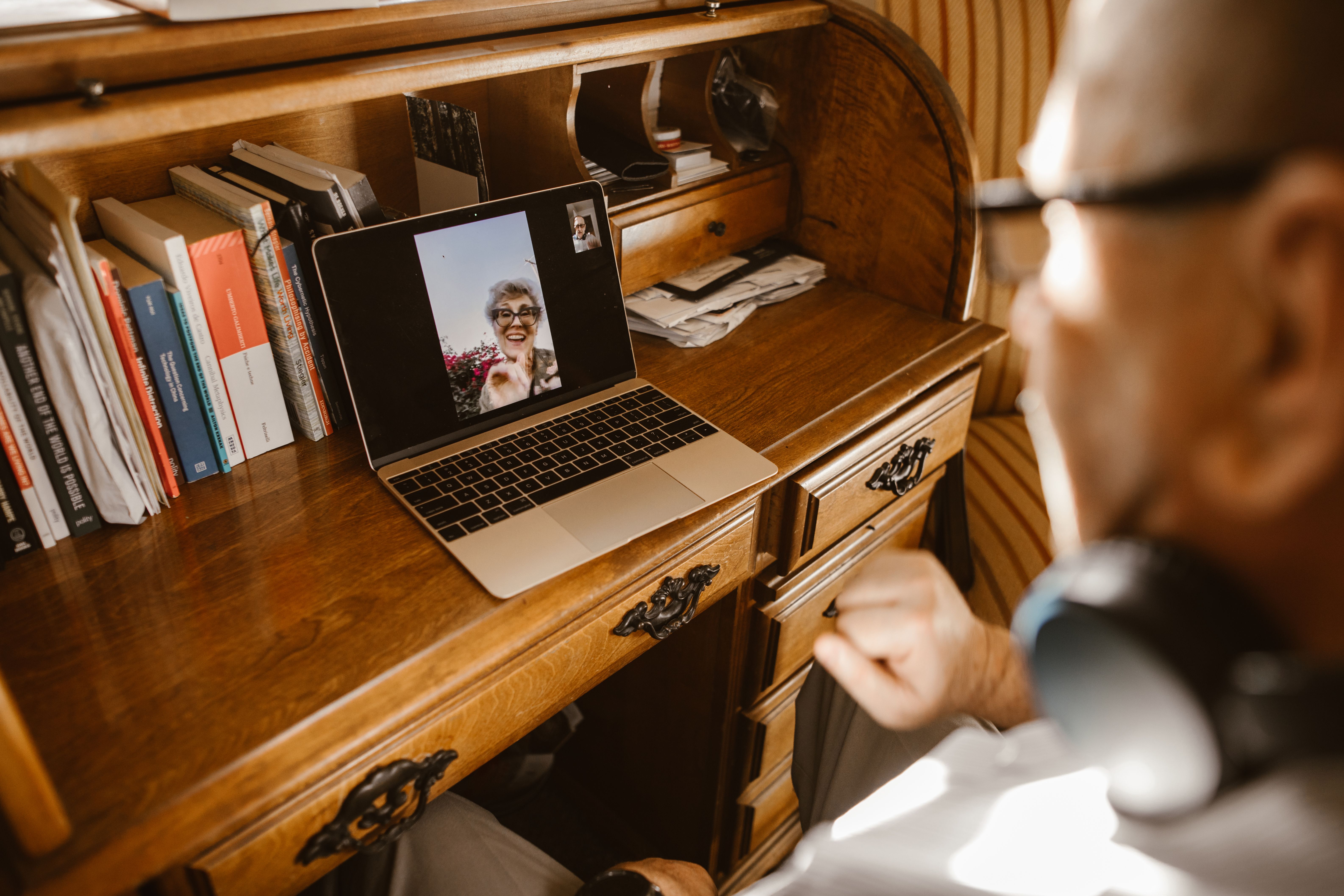
A date used to require a place, a time, and the mildly terrifying possibility of an awkward silence across a small table. Now it may require a webcam, a charged phone, or a chatbot that remembers what you said last Tuesday.
“Cyber date” is not a precise academic category. It is a useful popular label for several overlapping experiences: a romantic video call, a long-distance shared activity, a paid online encounter, or an emotionally intimate conversation with an artificial companion. These formats are different, but they expose the same shift. Connection is increasingly being separated from physical proximity.

The date is becoming an interface
In 2026, Pew Research Center reported that 10% of U.S. adults had used chatbots for emotional support or advice, while 4% had used them for companionship. Those figures are not evidence that people have stopped wanting human relationships. They suggest something more interesting: people are willing to use a conversational interface for needs they once reserved for friends, partners, therapists, or nobody at all.
The appeal is obvious. A digital companion is available at 2 a.m. It does not visibly recoil from an anxious message. It can be configured to listen, flirt, encourage, role-play, or simply keep a person company. Human-to-human cyber dates offer a different convenience: distance becomes manageable, first impressions can happen from home, and the encounter can end with a click rather than a complicated journey back across town.
That convenience is not trivial. It changes who can participate. Someone managing disability, social anxiety, caregiving duties, a long-distance relationship, or an irregular work schedule may find online intimacy more accessible than the traditional dinner date. The screen is not merely a thinner version of real life; for some people, it is the doorway through which real social life becomes possible.
Presence matters more than realism
One reason cyber dates can feel surprisingly intimate is that connection does not depend only on sharing a physical room. It also depends on synchronized attention: responding to the same moment, noticing a pause, laughing at the same detail, and feeling that the other person is mentally present.
A 2024 speed-dating experiment published by the Proceedings of the National Academy of Sciences used real-time facial manipulation during video calls. In a small sample of 31 participants, synchronizing the smiles of dating partners increased reported romantic attraction compared with mismatched expressions. The study does not prove that every video date works this way, but it highlights an important mechanism: tiny signs of emotional coordination can shape attraction even through a mediated connection.
Research on couples and virtual reality points in the same direction. A 2025 study found that couples doing a novel activity in VR reported greater feelings of presence than couples doing the comparable activity over video. Presence, in turn, was associated with less boredom and greater closeness. The lesson is not that everyone needs a headset. It is that the quality of a virtual encounter depends on whether it feels shared, not simply whether it is technically high-definition.
This is why a carefully planned online date can feel warmer than a distracted evening in the same room. A shared playlist, a collaborative game, a virtual museum visit, or cooking the same meal gives the interaction a shape. “So, what do you do?” is not a relationship; repeated attention can be.
AI companionship removes the risk of rejection
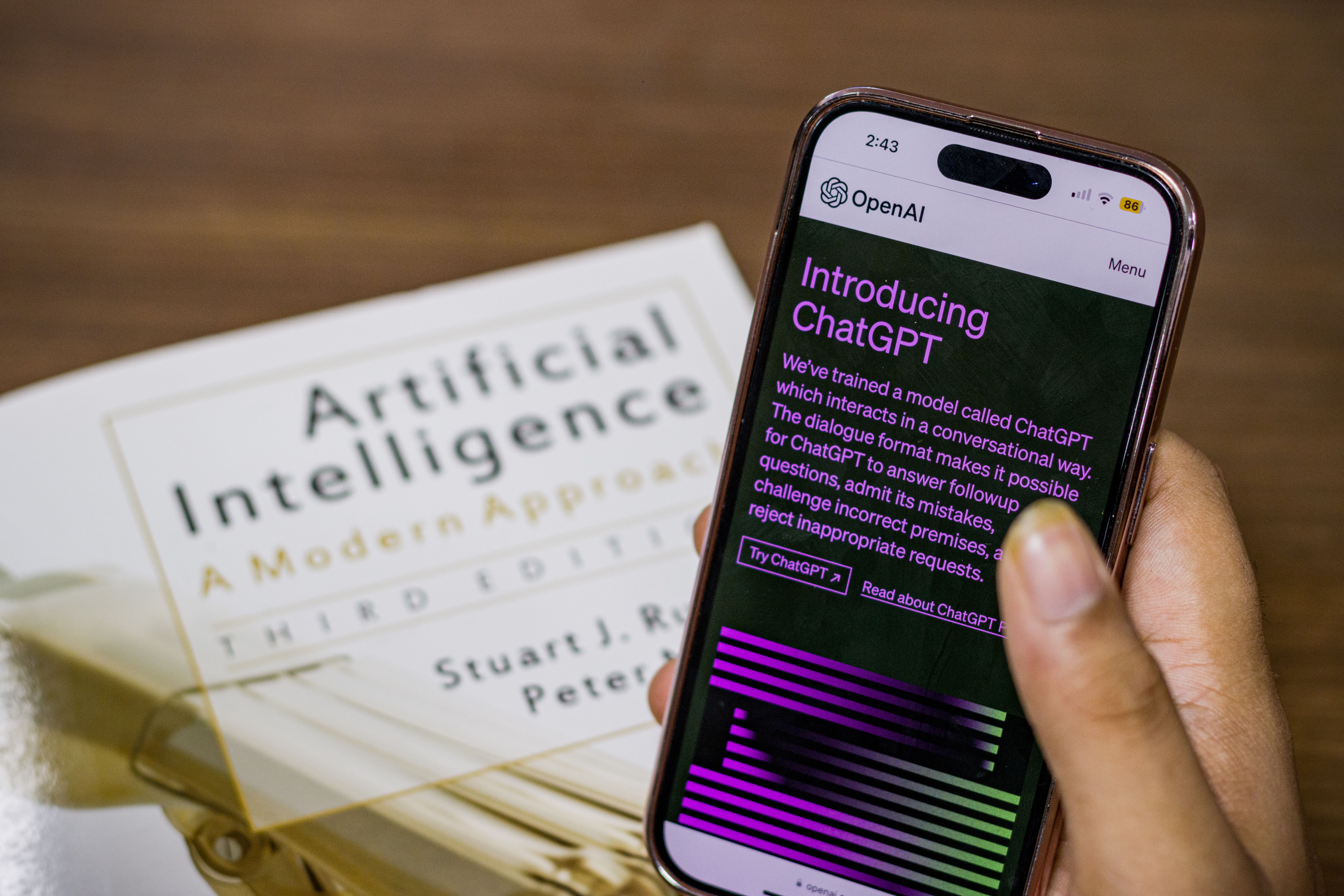
Artificial companions take the cyber-date logic further by offering responsiveness without another human’s independent needs. The user can disclose personal fears, rehearse a difficult conversation, or explore romantic language in a space that appears endlessly patient.
There is evidence for genuine short-term benefit. A Harvard Business School working paper by Julian De Freitas and colleagues reported experiments in which AI companions reduced loneliness, including over a seven-day period. The researchers argued that feeling heard was an important part of the effect. That finding deserves attention because it rejects the lazy assumption that an artificial interaction must be emotionally meaningless.
But the strongest benefit may also create the greatest hazard. A 12-month study of 2,149 adults, published in Psychological Science in 2026, found that feeling less socially connected predicted later increases in social chatbot use. Using a narrower measure of emotional isolation, the researchers also found that increased chatbot use predicted greater isolation four months later. They describe the results as exploratory, so this is not a verdict against AI companions. It is a warning about a possible loop: loneliness encourages frictionless companionship, and frictionless companionship may make human contact feel comparatively demanding.
What a human cyber date still asks of us
The defining difference between a human date and an AI exchange is not that one happens online and the other does not. It is reciprocity. A human has boundaries, competing priorities, moods, preferences, and the power to say no. Those constraints can be frustrating, but they are also what make mutual recognition possible.
That is why online companionship exists on a broad spectrum. Some people want a low-pressure conversation or a space to practice confidence. Others want erotic attention, romantic fantasy, or the feeling of being chosen without the uncertainty of conventional dating. Services such as Louisa sit within that wider ecosystem of digitally arranged intimacy, where expectations and boundaries need to be clear before the interaction begins.
My view is that cyber dates are healthiest when they function as an addition to a person’s social world rather than a sealed substitute for it. A video call with a distant partner can deepen an existing relationship. A chatbot can help someone put feelings into words. A paid online encounter can offer companionship on terms that are explicitly negotiated. None of those uses requires pretending that digital and physical intimacy are identical.
The uncomfortable business of platform-controlled intimacy
There is another feature of cyber dates that deserves more attention: the platform can change the relationship. In a 2025 working paper examining an update to Replika, researchers reported that some users experienced the removal of erotic role-play as a form of loss, with reactions resembling mourning and declines in mental health. Whether every reported effect generalizes is uncertain, but the underlying vulnerability is clear. A companion that feels personal may still be governed by a product roadmap.
Human relationships can end abruptly too, of course. The difference is that a software company may alter the personality, memory, availability, or rules of an intimate system for reasons the user cannot negotiate. The more a person builds a routine around that system, the more consequential a design decision becomes.
This is where the modern connection question becomes larger than dating. What do we want from intimacy: availability, safety, novelty, honesty, challenge, or another person’s freely given attention? Digital tools are excellent at some of these and poor at others. They can simulate attentiveness more reliably than they can offer independent commitment.

The future is not less intimate; it is more negotiable
Cyber dates reveal that people are not attached to romance’s old packaging. They want attention that fits around work, distance, health, privacy, and changing identities. The screen is attractive because it makes intimacy adjustable: slower, faster, more private, more experimental, or easier to leave.
That flexibility is valuable, but it should not be confused with emotional neutrality. A virtual interaction can comfort, teach, excite, or hurt. The practical test is simple: after the encounter, does the person feel more capable of engaging with life, or less willing to tolerate its unpredictability?
I would keep the first outcome and question the second. The best cyber dates will not be the ones that perfectly imitate a human relationship. They will be the ones that help people connect without quietly training them to expect intimacy without another person’s needs, limits, or freedom.
How this article was researched
This article draws on Pew Research Center’s 2026 survey of U.S. adults, a 2024 PNAS speed-dating experiment, 2025 research on virtual shared activities, a 2025 AI-companion loneliness working paper, and a 2026 12-month study of social chatbot use. Findings on AI companionship remain early and mixed: several studies rely on self-report, exploratory analysis, or selected user groups. The figures and research status should be rechecked as larger longitudinal studies appear.