

Apartment living works well for many dog breeds, but Mini Goldendoodles need structure to stay relaxed indoors.
Their intelligence and social nature make them wonderful companions, yet they can become restless without a steady routine.
A calm dog in a small space rarely happens by accident. Consistent exercise, mental engagement, and predictable schedules all help reduce anxiety and unwanted behavior.
This guide explains practical routine ideas that support calm behavior and make daily life smoother for both owners and dogs.
Starting With the Right Puppy

Source: doodleproud.com
Choosing a well-bred dog makes apartment routines easier from the first day. Temperament plays a major role in how easily a Mini Goldendoodle adapts to smaller living spaces.
Puppies raised in calm home environments usually transition better than those with limited early socialization.
Experienced breeders like Designer Golden Doodles offer some of the best mini Goldendoodle puppies for sale anywhere in the USA. They focus on stable personalities and early home-based care.
Puppies that grow up around everyday household activity often adjust faster to apartment sounds such as elevators, hallway traffic, and neighbors.
Early personality signs that support apartment living include:
- Puppies that settle quickly after playtime often adapt better to indoor environments
- Calm curiosity toward new sounds usually predicts easier adjustment
- Moderate activity levels help maintain balance indoors
- Comfortable crate behavior supports routine building
Starting with a puppy suited for indoor living simplifies everything that follows.
A Predictable Daily Schedule
Mini Goldendoodles tend to relax when they know what happens next. Irregular schedules often lead to restlessness or attention-seeking behavior.
A predictable routine helps regulate energy and encourages rest periods.
A simple weekday rhythm might include:
- Morning walks that burn early energy and prevent mid-morning excitement
- Midday potty breaks that reduce indoor accidents
- Short evening play sessions that release remaining energy
- Quiet wind-down time before bedtime
Dogs learn patterns quickly. Feeding, walking, and resting at consistent times builds confidence and reduces pacing or whining.
Regular routines also help regulate sleep cycles. Dogs that sleep well at night usually behave better during the day.
Consistency matters more than intensity.
Structured Exercise for Small Spaces
Exercise is essential even in apartment settings. Mini Goldendoodles need daily activity, but sessions do not have to be long to be effective.
Short structured outings often work better than occasional long walks.
Apartment owners often find success with a combination of indoor and outdoor activities.
Effective exercise patterns include:
- Two moderate walks per day provide steady physical stimulation
- Brief training sessions double as mental exercise
- Stair walking offers controlled indoor activity
- Fetch games in hallways can release bursts of energy
Weekly Activity Balance
| Activity Type | Frequency | Duration |
| Outdoor walks | Daily | 20 to 30 minutes |
| Indoor play | Daily | 10 to 15 minutes |
| Training sessions | 4 to 5 times weekly | 5 to 10 minutes |
| Longer outing | Weekly | 45 to 60 minutes |
Balanced activity prevents overexcitement while still meeting energy needs.
Dogs that receive steady exercise often rest more peacefully afterward.
Mental Stimulation That Encourages Calm

Source: premierpups.com
Mental activity often tires Mini Goldendoodles faster than physical exercise. Apartment dogs benefit greatly from problem-solving tasks that encourage focus.
Puzzle toys and scent games create structured challenges that reduce boredom. Many owners notice calmer behavior after even short mental sessions.
Simple activities that support relaxation include:
- Food puzzle toys that encourage slow eating and concentration
- Hide-and-seek games that engage natural scent tracking
- Basic obedience exercises that require attention
- Rotating toys to maintain interest
Mental stimulation activates problem-solving areas of the brain and can reduce stress behaviors in intelligent breeds, according to canine behavior research from veterinary training programs.
Short sessions work best. Five to ten minutes of focused activity often produces noticeable calm afterward.
Mental engagement helps replace restless pacing with purposeful activity.
Creating a Calm Apartment Environment
The environment inside the apartment plays a major role in daily behavior. Dogs relax more easily when they have a predictable and quiet resting area.
Noise and constant movement can increase alertness and tension. Even energetic dogs benefit from clearly defined calm zones.
Key environmental adjustments include:
- A dedicated dog bed placed away from heavy foot traffic
- Soft background noise that masks hallway sounds
- Consistent lighting patterns that support regular sleep cycles
- Comfortable temperatures that support rest
Did You Know?
Mini Goldendoodles often sleep between 12 and 14 hours per day when properly exercised.
Adequate rest supports balanced behavior and emotional stability.
A well-designed resting space encourages longer and deeper sleep periods.
Dogs that sleep comfortably often react less to outside disturbances.
Teaching Relaxation Skills Indoors
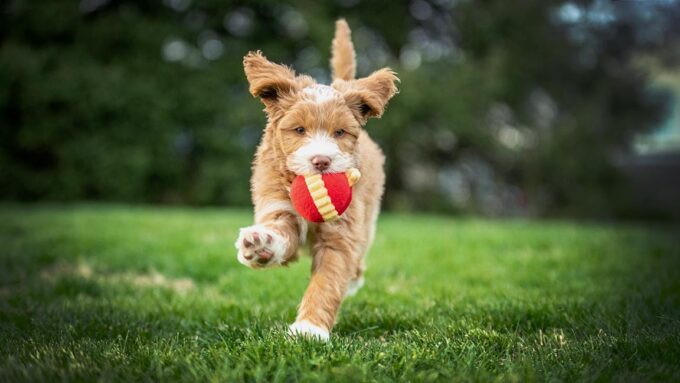
Source: goldendoodles.net
Relaxation is a skill that dogs can learn. Training calm behavior helps Mini Goldendoodles adjust to apartment living more smoothly.
Many owners focus heavily on activity while overlooking relaxation training. Teaching a dog how to settle makes a major difference.
Effective relaxation exercises include:
- Rewarding the dog for lying quietly on its bed
- Practicing calm behavior after walks
- Using consistent verbal cues for settling
- Encouraging quiet chew time during evenings
Training calm behavior works best when practiced daily in short sessions.
Dogs that learn settling cues respond faster when excitement levels rise.
Over time, relaxation training becomes part of the daily routine.
Managing Alone Time Successfully
Apartment dogs often spend time alone during work hours. Planning for these periods prevents stress-related behaviors.
Mini Goldendoodles tolerate alone time better when routines remain consistent.
Predictable departures and returns help reduce anxiety.
Helpful alone-time strategies include:
- Leaving safe chew toys that provide quiet activity
- Maintaining consistent departure times when possible
- Avoiding overly emotional goodbyes
- Providing exercise before leaving
Some dogs respond well to background sounds such as soft music or television.
Gradual independence training improves long-term comfort.
Dogs that feel secure while alone usually remain calmer throughout the day.
Conclusion
Mini Goldendoodles adapt well to apartment life when supported by structured routines and consistent habits.
Calm behavior develops through predictable schedules, balanced exercise, and steady mental engagement.
Small adjustments often produce noticeable improvements in daily behavior. A well-planned routine helps both dogs and owners enjoy apartment living with fewer challenges.